A Diploma in Pharmacy (D.Pharm) is one of the popular career-oriented courses for students interested in the healthcare and pharmaceutical industries. It provides essential knowledge about medicines, drug formulations, pharmaceutical chemistry, pharmacology, and patient care. However, many students believe that completing a pharmacy diploma means working only as a pharmacist in a medical store or hospital.
In reality, the Diploma in Pharmacy Career Scope extends beyond traditional pharmacy jobs. Graduates can explore opportunities in pharmaceutical companies, hospitals, healthcare organisations, medical distribution, research support, and business management. With additional education, practical experience, and relevant skills, students can build careers in several areas of the healthcare sector.
If you are planning to pursue pharmacy or have already completed your D.Pharm, understanding the available career opportunities can help you make an informed decision about your future.
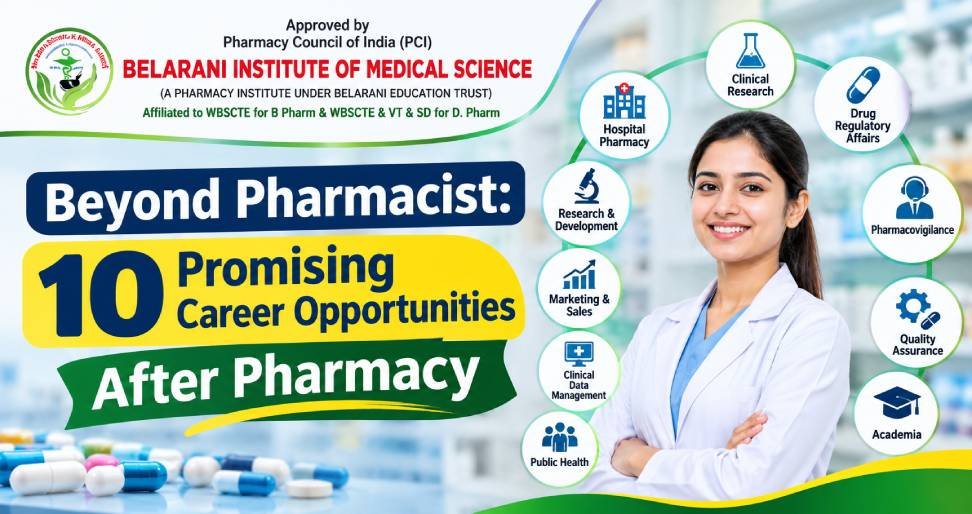
10 Promising Career Opportunities After Pharmacy
1. Community Pharmacist
Becoming a community pharmacist is one of the most recognised career options after completing a Diploma in Pharmacy. Community pharmacists generally work in retail medical stores and pharmacies, where they dispense medicines according to valid prescriptions.
Their responsibilities include explaining medication usage, checking prescriptions, maintaining medicine records, and guiding customers about the safe handling of medicines. Students must fulfil the applicable registration requirements to practise as pharmacists.
2. Hospital Pharmacist
Hospitals require trained pharmacy professionals to manage medicines and support patient care. A hospital pharmacist works with doctors, nurses, and other healthcare professionals to ensure the proper supply and dispensing of prescribed medicines.
Their responsibilities may include maintaining medicine inventories, checking prescriptions, monitoring stock, and providing information about medication usage. Hospitals, nursing homes, and multispeciality healthcare centres can offer employment opportunities in this field.
3. Pharmaceutical Sales Executive
The pharmaceutical sales industry offers another promising career path for D.Pharm graduates. Pharmaceutical sales executives represent medicine and healthcare companies and communicate product information to doctors, clinics, hospitals, and pharmacies.
This role requires communication skills, product knowledge, confidence, and an understanding of the pharmaceutical market. Candidates who enjoy interacting with people and working in a target-oriented environment may find this career suitable.
4. Medical Representative
A medical representative (MR) works as a link between pharmaceutical companies and healthcare professionals. Their primary responsibility is to introduce pharmaceutical products, explain their features, and build professional relationships with doctors and medical institutions.
This career can help pharmacy graduates develop sales, communication, negotiation, and marketing skills. With experience and consistent performance, they may progress to positions such as Area Sales Manager, Regional Sales Manager, or other leadership roles.
5. Pharmaceutical Production Assistant
Pharmaceutical manufacturing companies require trained employees to support the production of medicines and healthcare products. D.Pharm graduates may find entry-level opportunities in production-related roles, depending on the company’s recruitment requirements.
Typical responsibilities can include assisting with manufacturing processes, following standard operating procedures, maintaining production records, and ensuring workplace hygiene. Knowledge of pharmaceutical formulations and basic manufacturing practices can be useful in this field.
6. Quality Control Assistant
Quality control is an important part of pharmaceutical manufacturing because medicines must meet established quality and safety standards.
D.Pharm graduates may explore suitable entry-level support positions in quality control departments, subject to employer requirements. Their work may involve assisting with documentation, sample handling, laboratory procedures, and maintaining quality records.
Students interested in laboratory-based work can consider developing additional technical knowledge to improve their career opportunities.
7. Medical Store Owner or Pharmacy Entrepreneur
Students interested in entrepreneurship can consider starting their own retail pharmacy business. Operating a medical store allows pharmacy professionals to build an independent business while serving the healthcare needs of their local community.
However, opening a pharmacy requires compliance with applicable drug licensing rules, premises requirements, and registered pharmacist conditions. Business planning, inventory management, customer service, and knowledge of pharmaceutical regulations are important for long-term success.
8. Medical Coding and Healthcare Administration
The healthcare industry also offers opportunities in medical coding and administrative support. Medical coding professionals help convert medical diagnoses, procedures, and healthcare services into standardised codes used for documentation and billing.
D.Pharm graduates may explore entry-level healthcare support or medical coding opportunities after obtaining the required additional training. Attention to detail, computer knowledge, medical terminology, and communication skills are valuable in this area.
9. Pharmaceutical Marketing Executive
Pharmaceutical marketing combines healthcare knowledge with business and promotional strategies. Marketing professionals help pharmaceutical companies promote their products through market research, campaign planning, product positioning, and communication activities.
A D.Pharm qualification can provide a foundation in medicine-related terminology and product knowledge. Additional education or practical marketing experience can help candidates enter this field and explore future management opportunities.
10. Higher Education and Advanced Pharmacy Careers
For students who want to expand their professional opportunities, higher education can be an excellent option. After completing D.Pharm and fulfilling the applicable admission requirements, students can consider pursuing a Bachelor of Pharmacy (B.Pharm).
Higher education provides deeper knowledge of pharmaceutical sciences, drug development, pharmacology, and related subjects. It can also open pathways towards specialised studies, research-related roles, pharmaceutical management, and other advanced career opportunities.
Why Is the Diploma in Pharmacy Career Scope Growing?
The pharmaceutical and healthcare sectors play an important role in India’s economy. The growing need for medicines, healthcare facilities, pharmacies, diagnostic services, and medical professionals creates opportunities for trained pharmacy personnel.
Some important factors supporting career opportunities include:
- Growing Healthcare Demand: Increasing healthcare awareness and access to medical facilities create a need for pharmaceutical services.
- Expansion of Pharmaceutical Companies: Medicine manufacturers require employees across production, sales, marketing, and quality-related departments.
- Retail Pharmacy Growth: Medical stores and pharmacy chains continue to play an important role in medicine distribution.
- Career Flexibility: Pharmacy graduates can explore employment, entrepreneurship, and higher education.
- Professional Development: Additional qualifications and practical experience can help candidates move towards specialised positions.
Should You Choose D.Pharm or B.Pharm?
Both D.Pharm and B.Pharm are valuable pharmacy qualifications, but they serve different academic and career goals.
D.Pharm is generally a two-year diploma programme designed to provide foundational pharmaceutical knowledge and prepare students for pharmacy-related professional opportunities, subject to registration requirements.
B.Pharm is a four-year undergraduate degree that provides more comprehensive academic and practical knowledge of pharmaceutical sciences. It may be more suitable for students interested in broader opportunities in pharmaceutical industries, research, and higher education.
Before choosing, understand the differences between D.Pharm and B.Pharm: Which Is Better? and explore B Pharmacy 2 Year Course Details if you are researching further study options.
You can also explore What Can I Do After B.Pharm? to understand the career opportunities available after completing a pharmacy degree.
Skills Required to Build a Successful Pharmacy Career
A pharmacy qualification provides the academic foundation, but professional skills also play an important role in career development.
Some useful skills include:
- Knowledge of medicines and pharmaceutical terminology.
- Good communication and interpersonal skills.
- Attention to detail and accuracy.
- Basic computer and documentation skills.
- Understanding of medicine storage and handling.
- Customer service and problem-solving abilities.
- Knowledge of pharmaceutical regulations and ethical practices.
Developing these skills through practical training, internships, and professional experience can improve your employability.
Conclusion
The Diploma in Pharmacy Career Scope offers several opportunities beyond working as a traditional pharmacist. From hospital pharmacy and pharmaceutical sales to production support, quality control, healthcare administration, and entrepreneurship, D.Pharm graduates can explore different career paths based on their interests and abilities.
However, career growth depends on more than just completing a diploma. Practical experience, professional skills, additional qualifications, and continuous learning can help students achieve their long-term goals.
If you are interested in building a career in the pharmaceutical industry, a Diploma in Pharmacy can be a useful starting point. Choose your career direction carefully and explore further education opportunities to build a strong future in the healthcare sector.